

I always say this to people when they ask me about pickleball: Super Bowl I did not sell out its stadium. The NBA Finals was so small in the beginning relative to what it has become, and at least once, CBS chose to air golf instead, so it put the NBA game on tape delay. UFC was banned in most states in this country within a lot of our lifetimes.
That’s the journey of things becoming popular. Every sport that’s massive today was small and easy to dismiss at some point.
I’m 50 years old. I’ve watched UFC go from a side circus to one of the most important sports in the world. In my lifetime, I watched basketball go from the third sport to potentially the first sport, or the second sport. I watched football pass baseball as most peoples’ favorite sport in the U.S. I saw Tiger Woods change the calculus on golf. I watched ESPN go from something very few people watched when I was a kid to a cultural phenomenon.
That history matters because I think people dramatically underestimate how much room there is for more sports.
Most sports failed in the last 50 years because they couldn’t get TV distribution. You don’t need TV distribution anymore. You could be on Twitch. You could be on YouTube. You could be on social. The modern media landscape gives permission for more sports to succeed.
And that’s where pickleball is today.
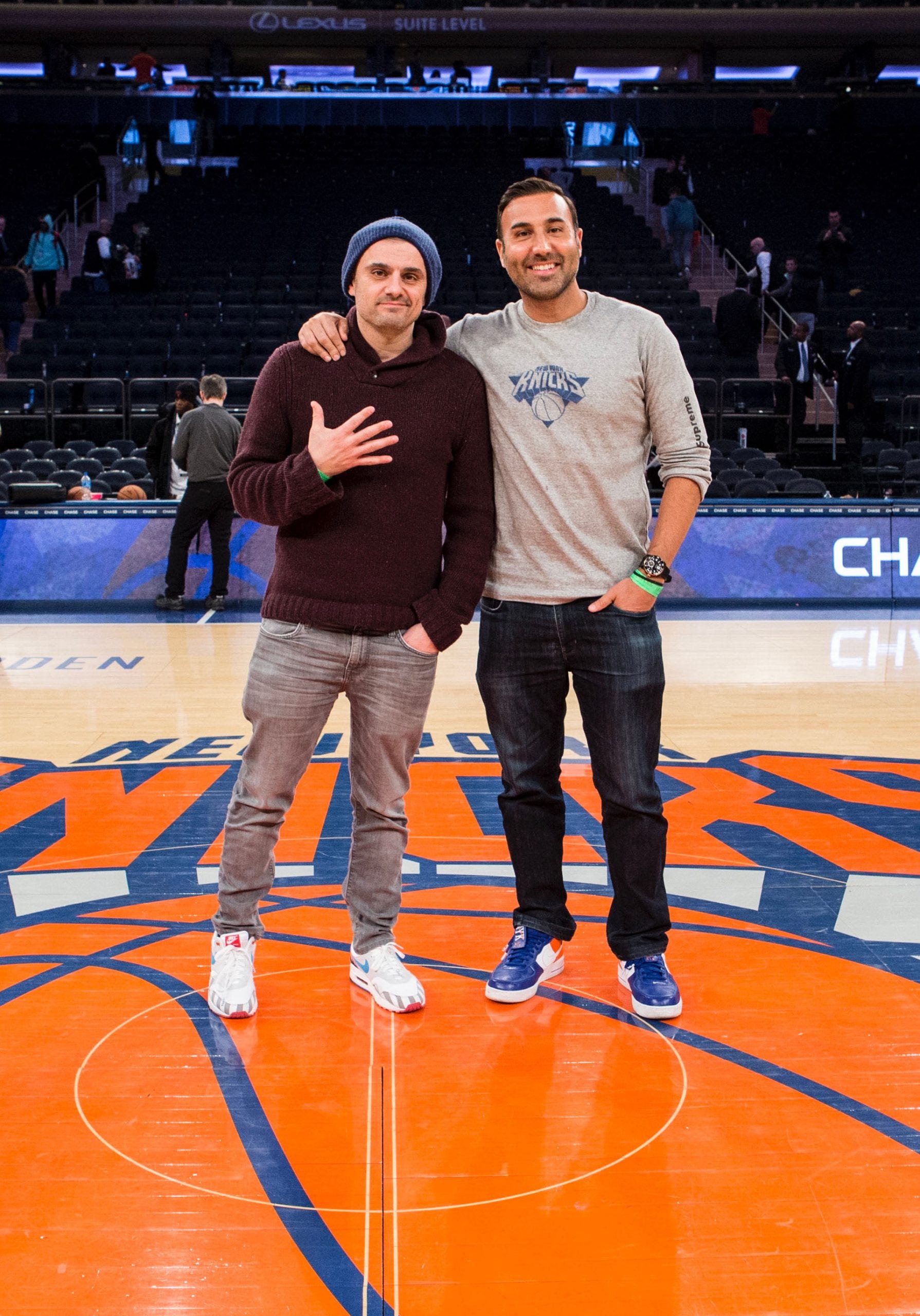
Pickleball and My Team, the New Jersey 5s
The numbers back it up. Pickleball hit 24.3 million players in the U.S. in 2025, up 22.8 percent from the year before and up 171.8 percent over three years, according to the Sports & Fitness Industry Association. That’s five straight years as the fastest-growing sport in the country, and the league’s founder has said the goal is 40 million players by 2030.
But when people ask me how I knew there was something there, my answer is intuition and pattern recognition. I played pickleball with Andre Agassi years before I invested in a pickleball team, which was years before most people had heard about pickleball. I do nothing random. It’s not guessing.
With pickleball, I saw the passion of a small group in Dallas and Austin, Texas. I’m a big fan of racquet sports, and ping pong, racquetball and tennis all have really good staying power, so this just made sense to me. The game was fun. People were already paying attention to it. Social content over-indexed when I would do homework.
That’s what I’m looking for. The passion of the early community. How the content behaves. The people running the company. The larger cultural trends…and then my intuition layered on top of all of it. We did probably the least amount of due diligence in the history of any deal on the New Jersey 5s, the team I own. My business partner Ryan Harwood got a call about Major League Pickleball wanting marketing help, mentioned in passing that they were selling teams, and he knows I’ve always wanted to own the Jets.
My answer was: let’s fucking do it.
It’s probably the first sport that’s come along where a 71-year-old grandma can whip the physical ass off her 23-year-old grandson. That’s how most of us got into it, and people want to argue that means it’s not a real sport. I’d say, first of all, then you have to eliminate golf. Second, it means the grandma has been playing her ass off in retirement, and the grandson showed up having hacked around with tennis and ping pong one time and got embarrassed. Now he’s got the bug.
There is not a competitive bone in your body that survives your grandma beating you at something.
On Paper Until It’s Legitimate
It’s on paper until it’s real, and I’ve been in tech investing long enough to know the difference. I’ve owned things that were remarkable on paper and then out of business.
What I like about this one is I think it holds up either way. If it’s at a $12 million valuation right now and it goes to $16 million or $18 million, great. If it goes to $7 million in a year because something doesn’t go right, it’s still going to feel better to me than the companies I’ve invested in at a $4 million valuation that raised at $400 million nine months later and then went to zero.
Those don’t have a liquidity event. This one, I think, is a legit league. That also gets to the larger point about why I invest in alternative sports.
Not all of them will work out. I’ve invested in the sailing league. I’ve invested in SlamBall. I’m in the BIG3. I have other sports investments. My biggest thesis is there’s more room for more because of the way media works.
For decades, a new sport basically needed permission from a handful of television executives to reach a meaningful audience. That bottleneck is gone. A league can build an audience through YouTube, Twitch, TikTok, Instagram and whatever comes next. The cost of distribution has collapsed.
At exactly the same time, I think people want more IRL. I believe in the rise of sports in the AI world because sports are tangible and real and analog. The more our lives move toward AI, screens and digital experiences, the more valuable real-world experiences become. Just look at how much people are paying for concerts and live sports like the NBA Finals and Wimbledon. It’s off the charts.
Those two macro trends, layered with my subjective opinion of who’s running the companies and my ability to impact their relevance through my marketing engine, are why I invest in alternative sports.
The Elephant in the Room
The big elephant in the room for pickleball is the media rights deal. That’s the answer to basically everything.
Ticket sales and sponsorship are a fine business, but that’s not where the big money comes from. I look at golf, a sport I hate playing and hate watching, and I totally understand why so many people love it: it’s easy to watch. Turn on CBS or NBC on a Sunday afternoon and it’s right there.
Right now, you go from YouTube to Pickleball TV to CBS Sports depending on the match, and it’s confusing, and it’s my job to cover this stuff. We’ve got to remove the friction to watch it. That’s what makes it go mainstream.
You’ll still have plenty of haters, the same way I hate golf, but remove the friction and more people get in a position to understand the sport. Once you understand something, you can appreciate it, right?
The difference from 30 or 40 years ago is that pickleball doesn’t need to wait for that media deal to exist. Social and digital distribution give it enough oxygen to grow before traditional media fully catches up. That’s a huge change in the sports landscape.
People Fall in Love With the Team
Team sports are epic because people fall in love with the team, not just the player.
I’m a diehard Knicks fan. I rep the front of the jersey, not the back. I love Jalen Brunson, but if Jalen Brunson went back to the Mavs tomorrow, I don’t love him anymore. I’ll still buy every piece of Knicks merch in the world.
MLP won’t reach full potential until the players actually live in the cities they represent and fans get to fall in love with a team the way I fell in love with the Knicks. That’s another piece people underestimate when they look at emerging leagues: You’re not only trying to create good competition. You’re trying to create emotional infrastructure.
Why does somebody in New Jersey care about the 5s? Why does their kid care? Why do they wear the hat ten years from now? That takes time. But every massive sports property had to build those emotional connections from zero.
Not the Only One Who Sees It
LeBron James and Maverick Carter’s group own an MLP team. So does Tom Brady. So does Kevin Durant, alongside his business partner Rich Kleiman. Draymond Green, Kevin Love, Drew Brees, Kim Clijsters, Naomi Osaka, Michael Phelps, Odell Beckham Jr. are all invested in pickleball.
On the player side, the face of the sport is Anna Leigh Waters, who turned pro at 12, is the winningest player in pickleball history, and became the first pickleball athlete to sign with Nike.
When you get that kind of concentration of athletes and investors moving before the media rights deal even exists, that’s not a coincidence. That’s smart money smelling underpriced attention before the rest of the market catches on.
Our team, the 5s, made Anna Leigh the No. 1 overall pick in the 2023 draft, when she was 15. She’s been the best player in the league since, and the 5s have reached the MLP championship final in back-to-back seasons, picking up Mid-Season and Super Sunday titles along the way.
Ryan runs the team day to day. I’m the guy who signed off on almost no diligence and hasn’t stopped paying attention since.
The Same Instinct, Different Jersey
Pickleball is an example of the whole thesis here on alternative sports. There’s also basketball.
I’m part owner of a BIG3 team, the Triplets, alongside Ice Cube. Basketball is one of my favorite sports in the world, and I’ve been incredibly impressed with the pop culture relevance of the BIG3 league. Half-court, faster pace, built for how people watch basketball now.
I’m also in on the SlamBall revival. I’ve invested in sailing. I own a wiffle ball team, and we just won the World Series. Not all of them will work. That’s not how investing works….But when people ask why I keep paying attention to these emerging sports, it goes back to the same thing: intuition, pattern recognition and the belief that the media environment has fundamentally changed.
When I watched UFC become UFC, when I watched football pass baseball, when I watched basketball explode, when I watched Tiger change golf, those things taught me something. Sports hierarchies are not permanent, and the sports people care about can change, and the way they watch can change, and the barriers that prevented smaller sports from becoming meaningful are dramatically lower than they used to be.
When people ask why I’m investing in these things, one of my answers is I get to train for owning the New York Jets one day. But the other is that I think there’s a lot of opportunity to be the future of sports at scale.
The Pitch to Brands
There are broadcast spots. There’s a logo on the jersey. That’s the most traditional sports thing you’re selling.
Then there’s social media content. We have a decent but mighty following. I can go to one of our players and say I want you to do this piece of content, I’ll cut you in on the deal, and now you’ve got the team plus the player. We can package meet-and-greets, clinics, pop-up events.
I consider the whole thing a media rights deal, the same way the Dink sells media sponsorships. We’re just packaging it as logo, content, distribution and events, and being pretty discerning about who we take. This is another reason I’m bullish on emerging sports. The definition of media has expanded.
You don’t need 20 million people watching one television broadcast to create something valuable. You can build relevance through thousands of pieces of content, live events, players’ audiences, league accounts and brand collaborations. The sport becomes the content engine.
Don’t Create. Document.
My advice to pickleball (and other) players is: don’t create, document. There’s too much content out there right now that all looks the same. Tips and tricks, highlight reels of practice. Film your day and let the editor find the special moments.
That’s what builds a person, not another how-to-dink video. I just wrote about this topic broadly, and this applies to the leagues, too. Part of what makes emerging sports interesting is that fans can experience the process of them becoming something. You’re not only watching the finished product. You can watch the league, teams and players build in real time.
The Phone Is Already Ringing
At first, everybody makes fun of the new thing or new sport. Then a few people get curious. Then talented people start moving toward it. Then the audience grows, then the money comes.
Then one day everyone pretends it was obvious. The window is open right now, in pickleball, in 3x3, in whatever’s next, and I think there are going to be more “whatever’s next” than people think.
The modern media landscape gives permission for more sports to succeed. People increasingly want tangible, real, analog experiences, and the people willing to move before everything has been proven get to participate in the upside if they’re right.
The Bryan Brothers beat me and my doubles partner Jordan Wile at a national tournament back in the day — but pickleball would be my ideal rematch now.
Funny enough, I just found an article from the 1990 Maccabi Games (the "Jewish Olympics") when Justin Gimelstob and I played doubles in Detroit. In case you want to see what the Jewish News looked like in 1990:
https://www.jhsnj-archives.org/?a=d&d=njjn19901018-01.1.51&e=-------en-20--1--txt-txIN-------
Pickleball's growth makes total sense to me: everyone who ever loved a racquet still has it in their nervous system. The sport just lowered the price of re-entry. Thanks for helping it grow.
"Don't create, document" is the line I'm stealing from this. It tracks with why people got tired of polished how-to content and started following actual builders instead—the process is the content now, not just the highlight reel. Curious if the 5s players push back on being filmed that much or if they've fully bought in.